

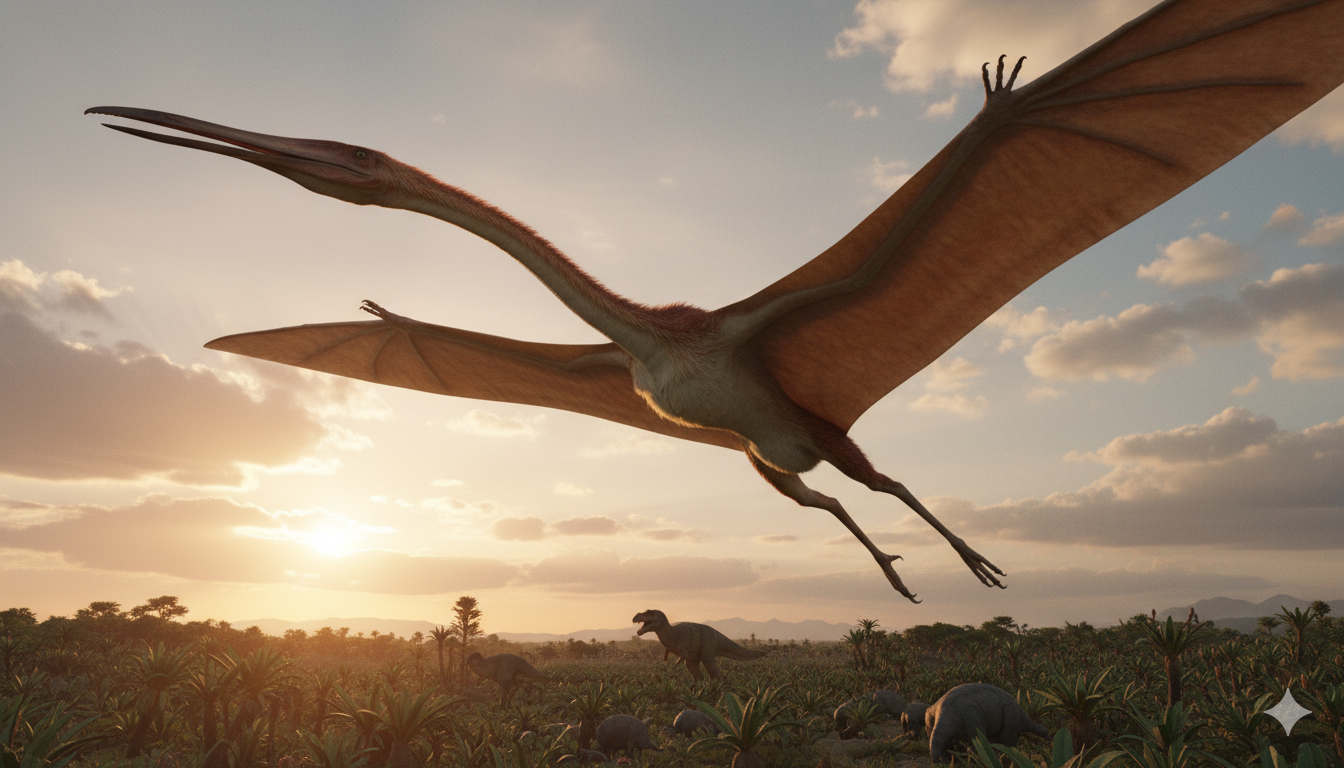
Have you ever imagined a creature as tall as a giraffe flying through the air? It sounds like something from a movie, but Quetzalcoatlus was very real! This amazing animal lived millions of years ago during the Late Cretaceous period. While many people call it a quetzalcoatlus dinosaur, it was actually a pterosaur, which is a flying reptile. It is named after a Mexican god who looked like a feathered serpent.
Learning the quetzalcoatlus pronunciation is the first step to becoming an expert. You say it like “ket-zal-ko-at-lus.” It might be a mouthful, but it is a name worth knowing! This creature was one of the largest animals to ever fly in our skies. In this guide, we will look at its massive size, what it ate, and why it is so famous today. Let’s dive into the world of this prehistoric giant!
The Big Question: Is Quetzalcoatlus a Dinosaur?
A lot of people ask, is quetzalcoatlus a dinosaur? The short answer is no! Even though it lived at the same time as famous giants like the T-Rex, it belongs to a different group. Dinosaurs are land animals with legs tucked under their bodies. On the other hand, Quetzalcoatlus was a pterosaur. These were flying reptiles that adapted to life in the clouds while dinosaurs ruled the ground.
It is easy to get confused because they both look like “monsters” from the past. However, thinking of them as cousins is a better way to understand them. Just like a bird is different from a lizard, a dinosaur quetzalcoatlus fans love is scientifically distinct. Knowing this difference helps us appreciate how diverse life was back then. It shows us that the prehistoric world had specialists for the land, sea, and air!
Quetzalcoatlus Biography Table
| Feature | Details |
| Scientific Name | Quetzalcoatlus northropi |
| Classification | Pterosaur (Azhdarchid) |
| Lived During | Late Cretaceous (68–66 million years ago) |
| Found In | North America (Texas) |
| Wingspan | 33 to 36 feet |
| Height | 16 to 18 feet (standing) |
| Diet | Carnivore (Small animals and fish) |
| Weight | 440 to 550 pounds |
How Huge Was It? Quetzalcoatlus Size and Height
The most shocking thing about this creature is the quetzalcoatlus size. When it stood on the ground, it used its wings like front legs. The quetzalcoatlus height was about 18 feet tall! That means if it walked down your street, it could look into a second-story window. It is hard to imagine a flying animal being that big, but the fossils prove it.
Scientists look at the quetzalcoatlus skeleton to figure out how it moved. Despite being so tall, it was surprisingly light for its size. Its bones were hollow, like the bones of modern birds. This helped it stay light enough to take off into the wind. If it were as heavy as a lead weight, it would never have been able to leave the ground. It was a masterpiece of natural engineering!
Spanning the Clouds: The Quetzalcoatlus Wingspan
If the height wasn’t enough to impress you, the quetzalcoatlus wingspan will! From one wingtip to the other, it measured about 36 feet wide. That is roughly the same size as a small private airplane or a school bus! When it opened its wings, it probably blocked out the sun for any small creatures running below. This massive span allowed it to soar for long distances without flapping too much.
Researchers believe Quetzalcoatlus could travel thousands of miles by catching warm air currents. It didn’t just fly; it glided gracefully through the atmosphere. Because its wings were so large, it could stay in the air for days at a time. Imagine looking up and seeing a living glider the size of a bus! It truly was the ultimate ruler of the prehistoric clouds.
The Discovery of Quetzalcoatlus Northropi
The specific type of this creature most people know is quetzalcoatlus northropi. It was first discovered in Texas, USA, back in the 1970s. A student found the first quetzalcoatlus fossil while exploring Big Bend National Park. This was a huge deal for science because no one knew flying reptiles could get that big! Before this, people thought pterosaurs were much smaller.
Finding these fossils is rare because hollow bones break easily over millions of years. However, the pieces we have found tell a great story. They show us that Quetzalcoatlus lived in inland areas, not just by the ocean. This means it might have hunted like a giant stork, picking up small animals from the grass. Every new bone found helps us understand its life better.
Is Quetzalcoatlus Scary? A Giant Predator
Many people find the idea of this creature a bit quetzalcoatlus scary. It had a very long, sharp beak that looked like a giant pair of tweezers. It didn’t have teeth, but it didn’t need them! It likely swallowed its prey whole. Imagine a creature taller than a giraffe landing in a field to hunt. That would definitely be a frightening sight for anything smaller than it!
While it looks intimidating, it was a vital part of the ecosystem. It kept the populations of smaller animals in check. Some scientists think it might have even eaten baby dinosaurs! Even though it seems like a monster, it was just an animal trying to survive. Its “scary” features were actually just tools that helped it find food and protect its territory.
Walking Like a Pro: The Quetzalcoatlus Skeleton
Looking at a quetzalcoatlus skeleton reveals a very strange body shape. It had a tiny body compared to its massive neck and head. Its legs were long, and its wings folded up into “arms” when it was on the ground. This allowed it to walk on all fours. It wasn’t clumsy on land either; it could probably move quite fast!
The neck of Quetzalcoatlus was made of long, stiff vertebrae. This gave it the strength to lift heavy prey but made its neck look very thin. Modern technology and 3D scans help scientists see how these bones fit together. It is amazing how such a delicate-looking frame could support such a massive animal. It was a perfect balance of strength and lightness.
Why Every Kid Needs a Quetzalcoatlus Toy
Because this animal is so cool, the quetzalcoatlus toy has become very popular! Many kids love adding this flying giant to their collection. It stands out next to a T-Rex or a Triceratops because of its unique shape. Having a toy version helps children understand the scale of these prehistoric animals. It makes learning about history feel like a fun adventure.
Playing with these models can spark a love for science and paleontology. When you hold a model, you can see how the wings fold and how the beak works. It turns a “scary” ancient creature into a friend you can learn from. Whether it is a plastic figure or a soft plush, these toys keep the memory of the sky king alive for new generations.
The Legacy of the Quetzalcoatlus Fossil
The quetzalcoatlus fossil is a treasure for museums around the world. These stones tell us about a world that existed long before humans. When we look at the fossils, we see a snapshot of history. They remind us that the Earth is always changing. Once, the sky was filled with giants, and today, we find their remains in the dusty ground of Texas.
Preserving these fossils is hard work. Paleontologists use special tools to clean the bones without breaking them. Each piece of the quetzalcoatlus skeleton is like a puzzle piece. Once we put them all together, we get a clear picture of the past. These fossils are our only way to talk to the creatures that lived millions of years ago.
Final Thoughts: The Wonder of Quetzalcoatlus
We have learned so much about the mighty Quetzalcoatlus. From its 36-foot wingspan to its giraffe-like height, it was a true marvel of nature. It wasn’t a dinosaur, but it was just as impressive as any T-Rex. By studying its fossils, we can imagine what the world looked like when giants flew through the air. It reminds us to stay curious about the natural world.
I think the most interesting part is how it could both fly and walk so well. It was a versatile survivor that dominated its environment. Even though it is gone now, it continues to capture our imaginations. Whether you are looking at a museum display or playing with a toy, this creature is unforgettable. The story of the sky king is one that will be told for a long time!
Frequently Asked Questions (FAQs)
1. How do I say the name Quetzalcoatlus?
The quetzalcoatlus pronunciation is “ket-zal-ko-at-lus.” It is named after the Aztec god Quetzalcoatl!
2. Was Quetzalcoatlus the biggest flying animal ever?
Yes! It is one of the largest known flying animals in history, with a wingspan of up to 36 feet.
3. Did Quetzalcoatlus have feathers?
Scientists think it had “pycnofibers,” which are like fuzzy hairs. They weren’t exactly like bird feathers, but they kept the animal warm.
4. Where were its fossils found?
Most fossils were found in Texas, USA. This is why we know it lived in North America during the Late Cretaceous.
5. Could it eat a human?
If humans lived back then, it certainly could have! Its beak was large enough to swallow small-to-medium animals whole.
6. Is it related to modern birds?
No, it is not a direct ancestor of birds. Birds evolved from small, feathered dinosaurs, while pterosaurs went extinct completely.
